














































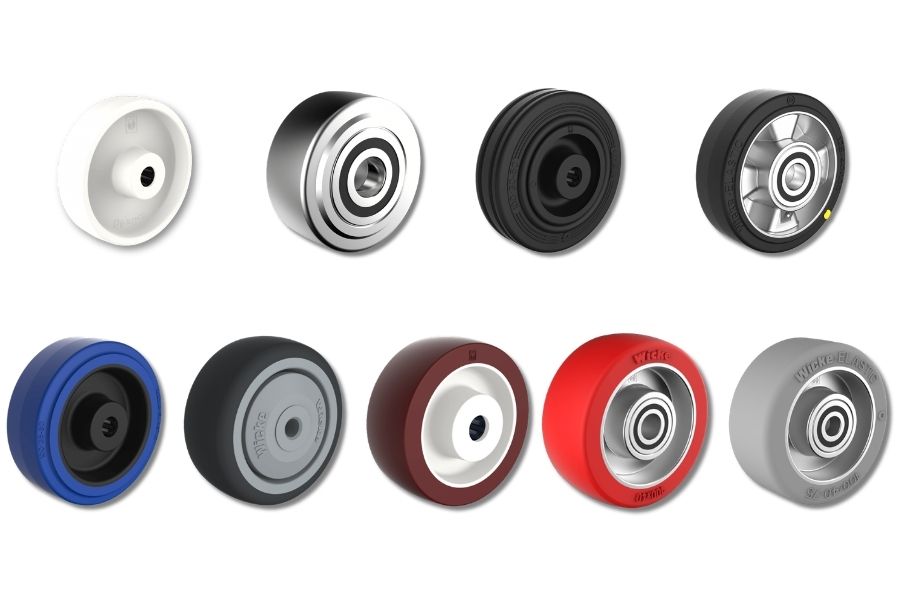
Understanding Castor Wheel Types: Choosing the Right Wheel for Every Application
Castor wheels are essential components in material handling equipment, trolleys, carts, machinery, and industrial workstations. Selecting the right castor wheel is critical for ensuring smooth movement, workplace safety, equipment longevity, and operational efficiency.
However, not all castor wheels are created equal. Different wheel materials, core constructions, and tread types are designed to perform under specific conditions. Factors such as load capacity, floor surface, operating temperature, moisture levels, and exposure to chemicals should all be considered before selecting a castor wheel.
Key Factors to Consider When Choosing Castor Wheels
Before selecting a castor wheel, evaluate the following:
- Load capacity requirements
- Floor type and surface condition
- Indoor or outdoor usage
- Temperature exposure
- Chemical and oil resistance requirements
- Noise reduction needs
- Rolling resistance and maneuverability
- Frequency of use
Choosing the correct wheel specification can significantly improve performance while reducing maintenance costs and downtime.
Castor Wheel Core Materials
Steel Core Wheels
Steel core wheels are among the strongest options available and are commonly used in heavy-duty industrial environments. They offer exceptional load-bearing capabilities and resistance to shock impacts, making them ideal for manufacturing plants, warehouses, and heavy equipment applications.
Advantages:
- Extremely high load capacity
- Excellent durability
- Resistant to impact damage
Limitations:
- Noisy during operation
- May damage sensitive flooring
Nylon Core Wheels
Nylon wheels provide excellent resistance to moisture, chemicals, oils, and abrasion. They are lightweight yet durable and are commonly found in food processing, pharmaceutical, and industrial environments.
Advantages:
- Chemical resistant
- Suitable for wet environments
- Low rolling resistance
Plastic Core Wheels
Plastic-centered wheels offer a cost-effective solution for light-duty applications. They are resistant to water, steam, oils, and various chemicals.
Best suited for:
- Institutional facilities
- Hospitals
- Retail equipment
- Light industrial applications
Pressed Steel Core Wheels
Pressed steel cores combine strength with affordability. They withstand heavier impacts compared to standard plastic-core wheels and reduce the risk of wheel failure under demanding conditions.
Aluminium Core Wheels
Aluminium core wheels provide a balance between strength and lightweight construction. They are corrosion resistant and commonly used where appearance and performance are equally important.
Cast Iron Core Wheels
Cast iron wheels are designed for extreme-duty applications involving very heavy loads and elevated temperatures.
Common applications include:
- Steel mills
- Foundries
- Manufacturing plants
- Heavy machinery transport
Solid Resin Wheels
Solid resin wheels are specifically engineered for high-temperature environments. They maintain structural integrity even during prolonged exposure to heat.
Ideal applications:
- Bakery ovens
- Powder coating lines
- Industrial drying systems
Castor Wheel Tread Materials
Polyurethane Wheels
Polyurethane is one of the most popular castor wheel materials due to its excellent balance of durability, floor protection, and load capacity.
Benefits:
- Non-marking
- Quiet operation
- High load capacity
- Resistant to oils and chemicals
- Protects floor surfaces
Because of their versatility, polyurethane wheels are widely used in warehouses, logistics centers, and manufacturing facilities.
Grey Rubber Wheels
Grey rubber wheels feature soft, non-marking treads that minimize floor damage and reduce vibration.
Advantages:
- Quiet movement
- Excellent floor protection
- Comfortable operation
These wheels are frequently used in hospitals, laboratories, and commercial environments.
Black Rubber Wheels
Black rubber wheels offer similar performance to grey rubber wheels but at a more economical price point.
Advantages:
- Cost-effective
- Good shock absorption
- Smooth rolling performance
Limitation:
- May leave marks on floors
Elastic Rubber Wheels
Elastic rubber wheels use specially formulated compounds that provide higher load capacities than conventional rubber wheels while maintaining excellent floor protection.
Benefits:
- High resilience
- Reduced rolling resistance
- Excellent durability
- Comfortable operation
Puncture-Proof Wheels
These wheels are manufactured using microcellular foam technology, eliminating the risk of punctures while maintaining shock-absorbing characteristics.
Ideal for:
- Wheelbarrows
- Garden carts
- Outdoor trolleys
- Construction equipment
Pneumatic Wheels
Pneumatic wheels contain air-filled tyres that provide superior cushioning and shock absorption on uneven surfaces.
Best applications:
- Construction sites
- Landscaping equipment
- Agricultural machinery
- Outdoor transportation
These wheels perform exceptionally well on gravel, grass, dirt, and rough terrain.
Matching Wheel Hardness to Floor Conditions
A general rule when selecting castor wheels is:
- Hard wheels perform best on soft surfaces.
- Soft wheels perform best on hard surfaces.
Hard tread materials provide lower rolling resistance and easier movement, while softer materials offer better floor protection and vibration reduction.
Understanding this relationship helps maximize wheel performance and extend both wheel and floor lifespan.
Conclusion
Selecting the correct castor wheel involves more than simply choosing a wheel that fits. Load requirements, floor conditions, environmental factors, and operational demands all influence wheel performance. Whether you require heavy-duty steel wheels for industrial manufacturing, polyurethane wheels for warehouse logistics, or pneumatic wheels for outdoor applications, understanding the characteristics of each material will help ensure safety, efficiency, and long-term reliability.
Investing in the right castor wheel solution not only improves equipment mobility but also reduces maintenance costs and enhances workplace productivity.